 SA Roofing
Fascia and soffit replacement cost in Dublin
The cost of a new uPVC roofline depends on its length, its height and what is hiding behind the old boards. This guide explains each factor and gives broad, hedged ranges for typical Dublin houses.
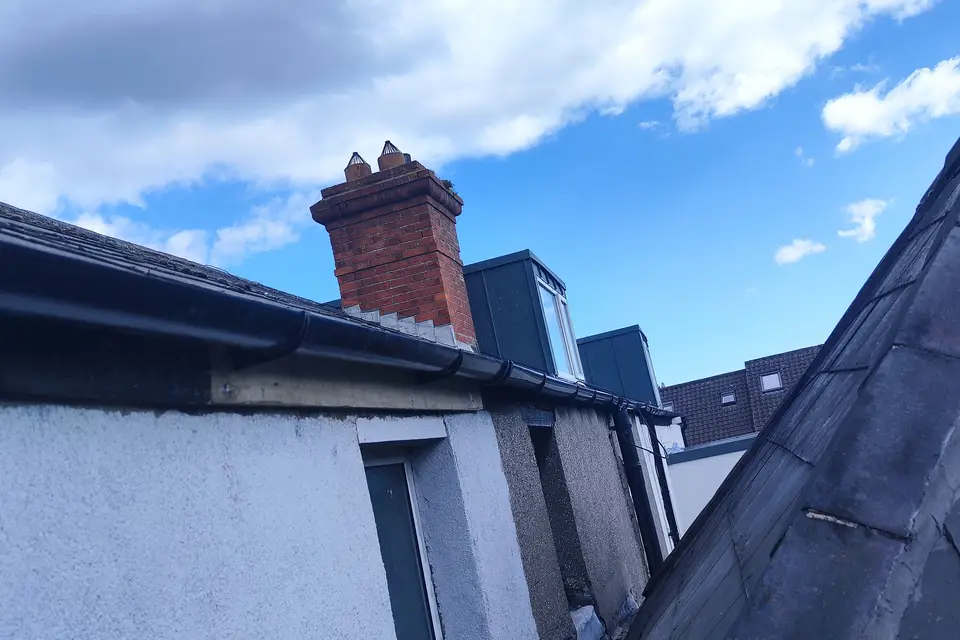
- Front of a semi
- Roughly €1,000 to €2,000
- Full roofline with gutters
- Roughly €2,500 to €5,000
- Biggest unknown
- Rotten rafter ends behind the old boards
- Price
- Free written quote after a visit
How much do new fascia and soffits cost in Dublin?
As a rough guide, uPVC fascia and soffits on the front of a typical Dublin semi cost €1,000 to €2,000, and a full roofline front and back with new gutters €2,500 to €5,000. By length, expect around €50 to €100 per metre before gutters. Scaffolding, where needed, adds roughly €500 to €1,500.
As a rough guide only. SA Roofing gives a free written quote after inspecting the roof.
The ranges below are broad market figures for typical Dublin houses with reasonable access. They exclude scaffolding unless stated and can be higher or lower depending on the property. Use them as a rough guide only.
| Job | Rough Dublin range |
|---|---|
| Repairing or replacing a single damaged section of uPVC fascia or soffit | Roughly €150 to €400 |
| uPVC fascia and soffit replacement on the front of a typical semi-detached house | Roughly €1,000 to €2,000 |
| Full roofline on a semi-detached house, front and back, with new fascia, soffits, gutters and downpipes | Roughly €2,500 to €5,000 |
| Fascia and soffit replacement priced by length | Roughly €50 to €100 per metre, before gutters |
| Scaffolding for a standard two-storey house front, where needed | Roughly €500 to €1,500 |
Fascia and soffit prices per metre
Fascia and soffits are largely priced by the length of roofline, and as a rough guide uPVC fascia and soffit replacement runs at around €50 to €100 per metre in Dublin, before gutters and downpipes. The lower end suits a straightforward run of standard white board at a low height, and the upper end reflects coloured or woodgrain finishes, deeper boards, vented soffits and fiddly corners or bay windows.
Rafter repairs, eaves protection and scaffolding are priced on top, so a per metre rate is a way to compare quotes rather than a final price. A rough measurement of the front and back of the house gives you a ballpark figure, and we confirm the price in a free written quote after an inspection.
Not sure what yours needs? WhatsApp us a photo and we will tell you what it looks like.
WhatsApp a photoOr get a free quoteWhat a fascia and soffit job includes
A fascia and soffit job is rarely just the boards. On most houses it involves taking down the gutters, removing the old timber, checking and repairing the rafter ends behind it, fitting new eaves felt or eaves protection where the old felt has perished, fixing the new uPVC boards and vents, and then putting the gutters and downpipes back up. Each of those steps adds to the price, and the condition of the timber behind the old boards can change the scope once the job is opened up.
The ranges in this guide are broad Dublin market figures given as a rough guide. They are not SA Roofing's prices, and every roofline we work on is quoted individually after an inspection.
What affects the cost
Length of the roofline
Fascia and soffits are priced largely by the metre, so a mid-terrace house with a short front and back costs less than a detached house with boards on all four sides, gable ends and bay windows. Corners, joints and changes in level all add fitting time.
Height and access
Bungalows and most two-storey houses can be done from ladders or a mobile tower. Three-storey houses, sloping sites, conservatories under the eaves or narrow side passages may need scaffolding, which is often the largest single extra on the job.
Condition of the rafter ends
Water from overflowing gutters soaks the ends of the rafters behind the fascia. If they are rotten, they need to be repaired or spliced before new boards can be fixed, and this is usually only visible once the old fascia comes off.
Gutters at the same time
Since the gutters have to come down anyway, most people replace them at the same time. That adds the cost of new gutters and downpipes but saves paying for access and labour twice. Our guide to gutter replacement costs covers that side of the job.
Capping or full replacement
Capping fits thin uPVC covers over the existing timber and is cheaper upfront. Full replacement removes the timber and fits solid uPVC boards in its place. Capping only makes sense where the timber is completely sound, because covering rot hides the problem rather than fixing it, and the work then has to be done again.
Colour, finish and ventilation
White uPVC is usually the least expensive. Black, anthracite grey and woodgrain finishes tend to cost more, as do vented soffits and over fascia vents where the attic needs extra airflow.
Comparing quotes like for like
Quotes for the same house can differ a lot, usually because they cover different work. One may be for capping over the existing timber while another is for full replacement, and one may include new gutters, eaves protection and vents while another leaves them out. Check that each quote says whether the old timber is being removed, how any rotten rafter ends will be dealt with and priced, whether gutters and downpipes are included, which colour and finish is being fitted, and whether access equipment or scaffolding is in the price.
Ask how the installer plans to deal with ventilation, especially if the attic has been insulated in recent years. Blocking the airflow at the eaves can cause condensation in the roof space, which is a far more expensive problem to fix than fitting a few vents at the start.
When to replace your roofline
Replacing the roofline before the fascia rots through keeps the job simpler and cheaper, because rafter repairs are where costs climb. Peeling paint, soft timber, sagging gutters and gaps in the soffit are all signs that the boards are due. Our guide to fascia and soffit problems explains what to look for and the options in more detail.
SA Roofing supplies and fits uPVC fascia and soffits across Dublin, and can replace your gutters on the same visit. A photo of the eaves sent on WhatsApp shows us whether the boards look like a capping job or a full replacement, and we confirm the price in writing after a free inspection of the timber behind them.
Frequently asked questions
Is uPVC capping cheaper than full replacement?
Yes, capping usually costs less upfront because the old timber stays in place. It is only worth doing where that timber is completely sound, otherwise the rot carries on behind the new covers and the job has to be done again.
Can the price change once the old fascia is removed?
It can, if the rafter ends behind the old boards turn out to be rotten. A good installer will explain in advance how that would be priced and show you the damage before doing any extra work.
Do I need scaffolding for new fascia and soffits?
Not always. Many bungalows and two-storey houses can be done from ladders or a mobile tower. Taller houses or awkward access may need scaffolding, which should be listed in the quote.
Are coloured uPVC fascias more expensive?
Usually a little, as white is the most widely stocked finish. Black, anthracite grey and woodgrain boards tend to cost more, and the gutters and downpipes are normally chosen to match.
Is it worth replacing just the front fascia?
It can be, if the back of the house is in good condition or was done more recently. Doing the whole roofline at once usually works out better value per metre because the access and set-up are shared, but there is no need to replace boards that are sound.
Do new fascias and soffits add value to a house?
They will not add much to a valuation on their own, but rotten timber and a sagging roofline are picked up in surveys and put buyers off. Sound uPVC fascia, soffits and gutters make a house look cared for and take a repair job off the buyer's list.