 SA Roofing
Roof repairs in Dublin
We find where the water is really getting in and fix it with matching materials, from a single slipped slate to a failed valley or ridge. Free, no-obligation quotes for homes and businesses across Dublin.
Or get a free quote by form, we will call you back.
- Over 7 years of roofing experience
- Fully insured for domestic and commercial work
- Free, no-obligation quotes
- 24/7 emergency roof repairs
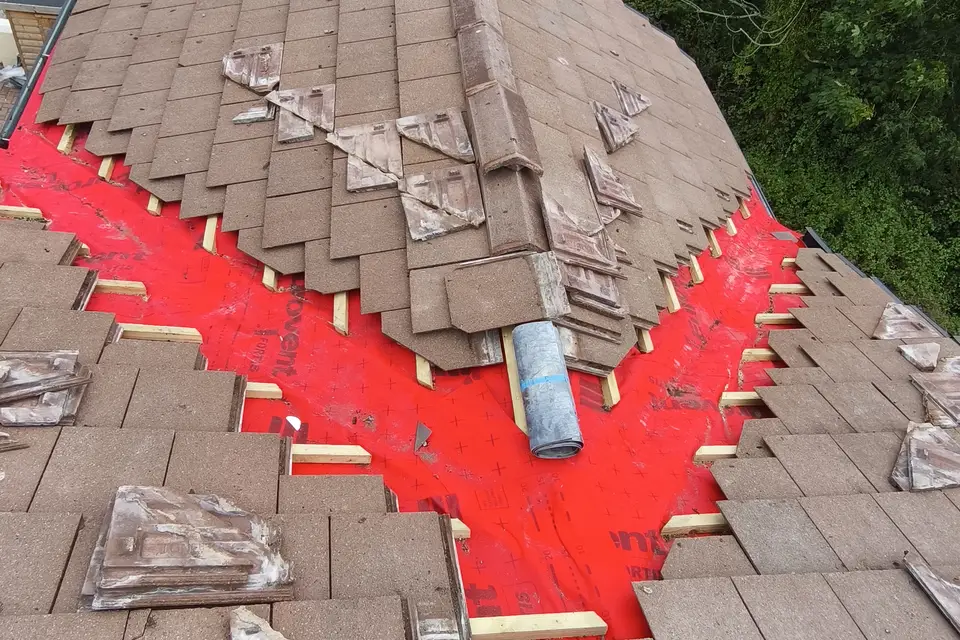
- Typical signs
- Ceiling stains, slipped or missing slates and tiles, loose ridge tiles, cracked lead flashing
- What we do
- Trace the leak from the attic and the roof, then repair it with matching slate, tile or lead
- How long
- Most small repairs are usually done in a single visit
- Price
- Free written quote after a visit
- Emergency
- 24/7 on 085 172 1435
When a roof needs repairing
The first sign of a roof problem is usually a brown stain on a ceiling, slates or tiles in the garden after a storm, or a loose ridge tile spotted from the street. Water often runs along a rafter before it drips, so the real source is usually higher up the slope than the stain. Our homeowner checklist of the signs your roof needs repair covers what to look for from the ground, in the attic and around the gutters.
Roof leak repairs
Leaks are the most common roof problem on Dublin houses, and finding the source is the skilled part of the job. Water that gets past a slate or a flashing can travel along the felt or a rafter for a metre or more before it shows on a ceiling. These are the places on Dublin roofs where leaks start most often, and how we repair each one. For a fuller explanation of why roofs leak, read our guide to what causes roof leaks.
Finding where a roof leak is coming from
The stain on the ceiling is rarely directly below the fault. Where we can, we start in the attic, following damp timber and drip marks back up the slope, then check the roof above that point, including the slates or tiles, the flashings, any valley and the gutter at the eaves. It helps a great deal if you can tell us when the leak appears, how heavy the rain was and which way the wind was blowing.
Leaks that only show in heavy rain
A roof that stays dry in ordinary rain and drips in a downpour usually has a small defect, such as a lifted flashing, a slipped slate or a partly blocked valley, that only heavy rain tests. Our guide to a roof leaking in heavy rain explains how the pattern of the leak points to the cause.
Can a roof leak be fixed from inside?
Only the damage inside can be dealt with from the attic. A tray under the drip or tape over a split in the felt may slow the water, but the slate, tile, flashing or felt that has failed is on the outside, and that is where a lasting repair is made. A look in the attic is still worth it, because it shows where the water is tracking.
Flashing around chimneys and walls
Lead flashing seals the joint where the roof meets a chimney stack, a gable wall or the wall of a taller building. Over the years lead cracks, splits or gets lifted by the wind, and the mortar holding it into the brickwork falls out. We refix, dress or replace the lead and repoint it into the joint so that water is turned back onto the slates.
Valleys
A valley is the channel where two roof slopes meet, and it carries more water than any other part of the roof. Old lead valleys wear thin and crack, mortar valleys on tiled roofs break up, and leaves and moss collect in the channel and push water sideways under the slates. Depending on its condition, we clear and repair the valley or reline it.
Cracked and missing tiles
On concrete tile roofs, tiles crack from frost, from a knock, or from someone walking on the roof to reach an aerial, and storms lift loose ones off. We replace them with the closest available profile and check the felt and battens underneath while the gap is open. If a tile has come off, our guide to a missing or slipped roof tile explains what to do until it is replaced.
Slipped slates and nail sickness
On older Dublin slate roofs, each slate is held by two nails, and the original iron nails rust through after decades of damp weather. Roofers call this nail sickness. The slates then start to slip one by one, usually after a windy spell, and each gap lets rain onto the felt and battens below. A few slipped slates can be refixed with clips or with tingles (narrow strips of lead or copper fixed to the batten and folded up to hold the slate). When slates are slipping all over the roof every winter, the fixings have failed across the whole slope and the roof is near the end of its life. Our guide to slipped slates explains how to tell the difference.
Ridge and hip tiles
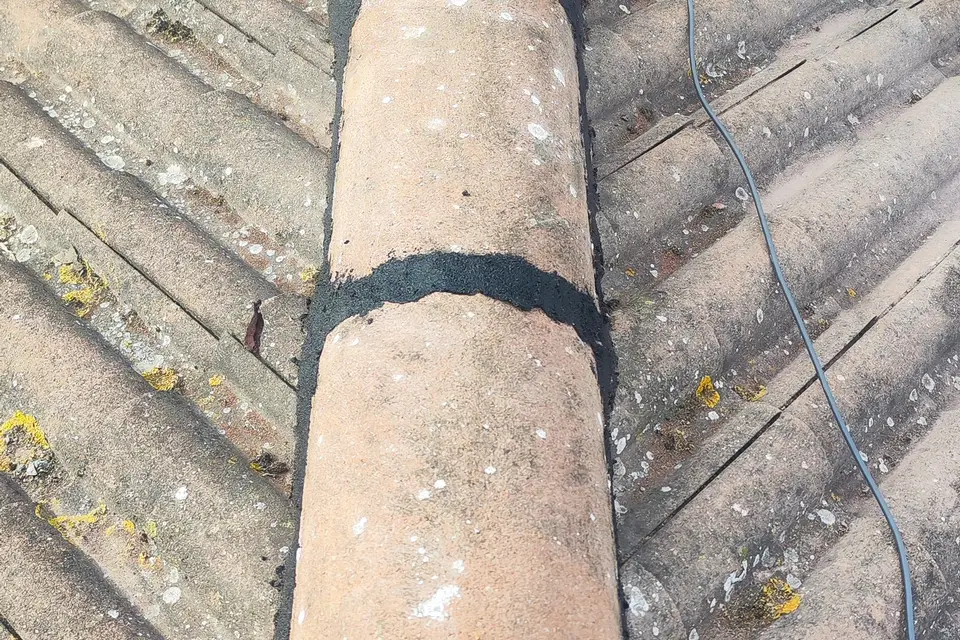
The tiles along the ridge and hips are traditionally bedded in mortar, which cracks and washes out after years of rain and frost. Once the bedding fails, water gets in under the ridge and the tiles can work loose in high wind. We lift and re-bed loose ridge and hip tiles, or fix them mechanically where that suits the roof.
Where a flat roof meets the house
On rear extensions, porches and dormers, the junction between the flat roof and the wall of the house is one of the most common leak points. The felt upstand cracks or pulls away and the flashing above it fails. We cut out the failed detail and renew the upstand and flashing so the junction is properly sealed. Our flat roof repairs page covers the rest of the flat roof. Our guide to an extension roof leaking where it meets the house covers the other causes, including water coming down inside the wall.
How we repair a roof, step by step
Every repair starts with finding the cause. Patching the spot directly above the ceiling stain without understanding how the water got there is how leaks end up being repaired three times. This is the process we follow on a typical pitched roof repair.
Inspection inside and out
Where we can, we look in the attic first to see where water is tracking along the timbers and felt. Then we inspect the roof itself, checking the slates or tiles, the ridge and hips, valleys, flashings around chimneys and walls, and the gutters at the eaves.
Explaining what we found
We tell you what is causing the problem, what needs to be repaired now, and anything we noticed that is worth keeping an eye on. You then get a free quote for the repair.
Safe access
Depending on the height and position of the repair, we work from ladders and roof ladders or arrange scaffolding or other access equipment. Access is planned before the job starts and included in the quote.
Carrying out the repair
Damaged slates are removed and replaced with matching slates fixed with copper or stainless clips. Broken concrete or clay tiles are swapped for the closest available match. Ridge and hip tiles are re-bedded or mechanically fixed, failed lead is dressed or replaced, and any damaged felt or battens under the repair area are renewed.
Final check
Once the repair is done we clear the gutters of any debris from the job, tidy up, and go over the finished work with you.
Not sure what yours needs? WhatsApp us a photo and we will tell you what it looks like.
WhatsApp a photoOr get a free quoteMaterials and matching your roof
Matching the existing roof matters for both looks and performance. Older Dublin houses usually have Welsh or Irish natural slate, and roofs that were re-slated in recent decades often have Spanish slate. We replace like with like wherever possible, using the closest match available when the original is no longer made. Post-war semis mostly have concrete interlocking tiles, many of which are no longer made in the original profile, so we source the closest compatible tile. Lead work is carried out in lead of a suitable thickness for the job, and on flat sections we use felt and torch-on systems. Because we supply and fit everything, the materials are included in your quote.
Repair or replace?
Most leaking roofs need a repair rather than a new roof, and we will tell you if yours is one of them. A handful of slipped slates, a cracked ridge tile or a worn piece of flashing does not justify replacing a roof that is otherwise sound.
Replacement starts to make sense when the problems are widespread rather than isolated. On old slate roofs the most common reason is nail fatigue, where the original iron nails have rusted through and slates are slipping all over the roof every winter. On concrete tile roofs it tends to be tiles that have become porous and brittle, or underfelt that has perished so the roof no longer has a second line of defence. If we think you are reaching that point, we will show you why and give you options for both a repair and a replacement. Our article on how long a roof lasts in Ireland covers typical lifespans for each roof type.
As a general pattern, this is how the common signs tend to point.
| Sign | Usually repair | Usually replace |
|---|---|---|
| Slipped slates | A few slates, refixed with clips or tingles | Slates slipping all over the roof every winter |
| Cracked tiles | A few cracked tiles, swapped for the closest profile | Tiles porous and brittle across the whole roof |
| Underfelt | Damaged felt under a small area, renewed while the gap is open | Felt perished across the roof, so there is no second line of defence |
| Flashing or ridge | A worn piece of flashing or a cracked ridge tile | Rarely a reason to replace a roof that is otherwise sound |
| Leaks | One leak with a clear entry point | Repairs needed somewhere on the roof every winter |
What affects the cost of roof repairs
For rough Dublin price ranges, see our roof repair cost guide; the exact price comes in a free written quote after an inspection.
There is no standard price for a roof repair, because a few practical things decide how big the job really is. Access is often the biggest of them. A slipped slate on a single-storey return can be reached from a roof ladder, while the same repair on the front of a three-storey house or in a steep valley may need a tower or scaffolding.
The size of the area involved matters next, along with the roof material, since natural slate and discontinued concrete tile profiles take longer to match and fix than a modern tile. The condition of the felt, battens and timbers under the damage also counts, and if we find hidden damage once the roof is opened, we agree any extra work with you first. If you are 66 or over, or bringing a vacant house back into use, our guide to roof repair grants in Ireland explains which schemes can help with the cost.
Why it pays to act quickly
Irish weather does not give a damaged roof much rest. Once water gets past the slates or tiles it soaks the battens and felt, wets the insulation (which then stops insulating), and can stain or bring down plasterboard ceilings. Left long enough it rots rafter ends and wall plates, and that turns a small repair into a much bigger one. Wet insulation also means a colder house and higher heating bills, and damp in the attic encourages mould.
Small faults also grow in high wind. A single slipped slate gives the wind something to catch, and the next storm can strip several more. Getting a repair done in early autumn, before the worst of the winter weather, is far cheaper than dealing with storm damage in January. If the damage is already letting water in, see our emergency roof repairs page. You can also read more about what causes roof leaks. We carry out roof repairs right across the city, as roofers in North Dublin from our base in Dublin 7 and throughout South Dublin.
Get a free quote
Tell us what you need and we will call you back to arrange a free visit.
We only use your details to reply. Privacy policy.
Frequently asked questions
Can you find where my roof is leaking?
Yes, in most cases. Where we can, we start in the attic to see where water is tracking along the timbers and felt, then inspect the roof above that point, including the flashings, valleys, ridge and any flat roof junctions. Water often travels some distance before it shows on a ceiling, so we follow it back to where it is getting in rather than patching the spot above the stain. If water is coming in now, our emergency guide explains what to do while you wait.
Can a roof leak be fixed from inside the attic?
Not properly. Looking in the attic can show where water is getting through, which helps us trace it, but the slate, tile, flashing or felt that has failed is on the outside and has to be repaired there.
Why does my roof still drip after the rain has stopped?
Water that gets in can run along battens, felt and rafters and soak into insulation, so it can keep dripping for hours after the rain ends. If damp appears on cold, dry mornings instead, it may be condensation, which our guide to condensation in the attic explains. Our guide to a roof leaking in heavy rain explains how that delay makes leaks harder to trace.
What is the most common roof repair?
On Dublin houses it is slipped or broken slates and tiles, followed by failed lead flashing around chimneys and walls, and cracked mortar under ridge tiles. All three are usually small, quick repairs if they are caught early, before water has soaked the battens and felt underneath.
Can you replace a single missing tile?
Yes. We check the felt and batten under the gap, fit the closest matching tile and fix it in place, and we look at the tiles around it because one gap often loosens its neighbours. Our guide to a missing roof tile explains what to do until it is replaced.
Who should I call to fix a leaking roof?
A roofer rather than a general builder or handyman. Finding the source of a leak means checking the flashings, valleys and felt from the attic as well as the roof surface, and the drip on the ceiling is often well away from where the water gets in.
How much does a roof repair cost in Dublin?
It depends on the type and extent of the damage, the roof material, how easy it is to reach the repair (and whether scaffolding is needed), and whether hidden damage is found underneath. We give a free quote after inspecting the roof. Our guide to roof repair costs in Dublin explains the main cost factors in more detail.
How long does a roof repair take?
Most small repairs, such as replacing slipped slates or a few broken tiles, are usually done in a single visit. Larger jobs like re-bedding a full ridge, replacing a valley or repairing lead around a chimney can take longer, particularly if scaffolding is needed. We will give you an idea of the timeline when we quote.
Do you need to inspect the roof before quoting?
For almost every repair, yes. Photos are useful for judging urgency, but the cause of a leak is often not where the damage appears, so an inspection is the only way to quote accurately for the right repair.
Do you charge to come out and look at a leaking roof?
No. We look at the roof and give you a free, no-obligation quote, and a WhatsApp photo beforehand helps us arrive with the right materials.
What happens if you find more damage once the work starts?
Sometimes rotten battens or damaged felt only become visible once slates or tiles are lifted. If that happens, we stop, show you what we have found, explain what it means and agree any extra work and cost with you before carrying on.
Will my home insurance cover a roof repair?
Many home insurance policies cover sudden damage, such as storm damage, but not wear and tear or gradual deterioration. Check your policy and contact your insurer before work starts if you plan to claim. We are happy to describe the damage we found and the work we carried out so you have the information your insurer asks for. Our guide to whether home insurance covers a roof leak explains the usual line insurers draw.
Can you match my existing slates or tiles?
In most cases, yes. We match natural slate as closely as we can and source the closest available profile for concrete and clay tiles. Where an exact match is no longer made, we will explain the options before we start.
Do you repair roofs on commercial buildings?
Yes. We carry out roof repairs on commercial premises, rental properties and homes, and plan access and timing around how the building is used.
More answers on our roofing FAQs page.
Related
Our roofing services
Emergency roof repairs
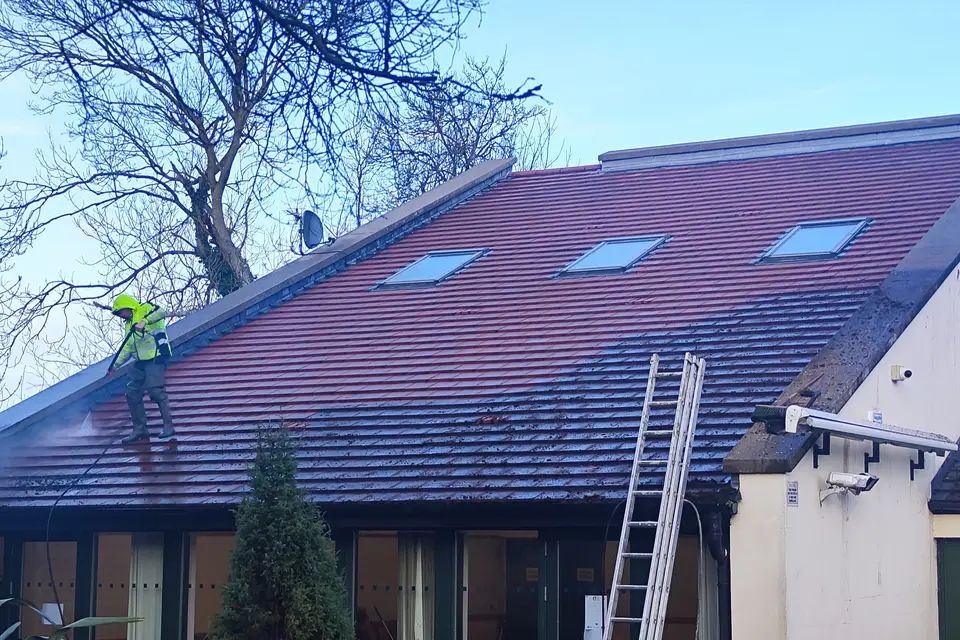
A 24/7 call-out for storm damage, active leaks and fallen tiles, made safe and watertight, day or night.
Flat roofs
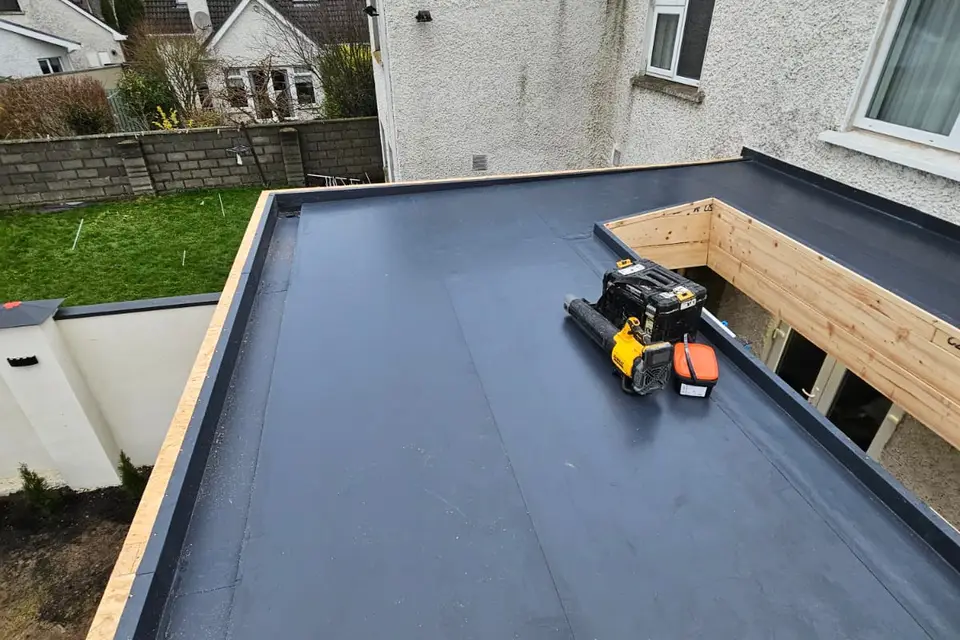
Felt and torch-on flat roofs for extensions, garages and dormers, repaired or fully replaced.
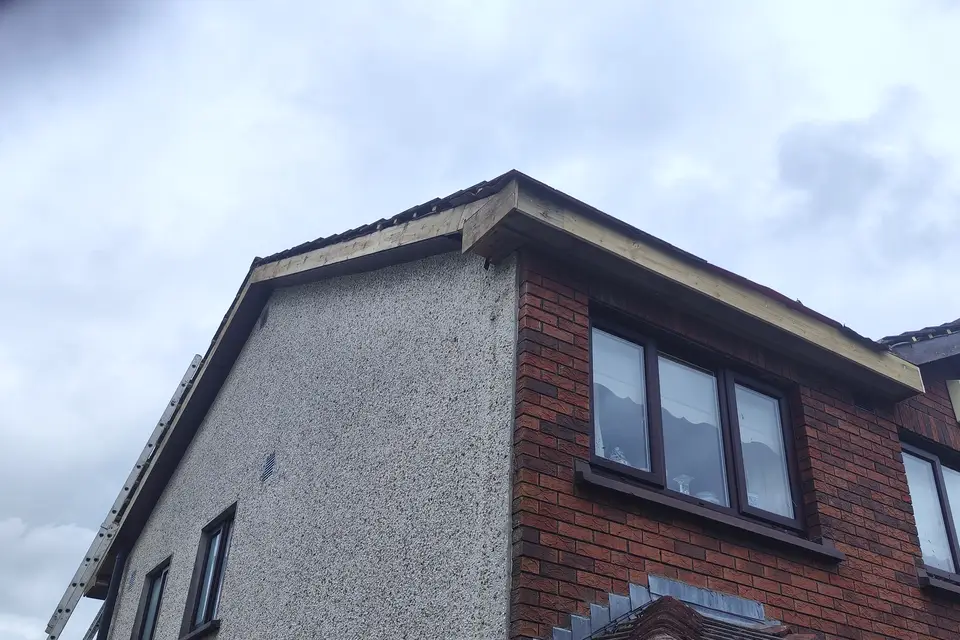
Gutter repairs
uPVC gutter repairs, new gutters and downpipes, and full replacements to keep water away from your walls.
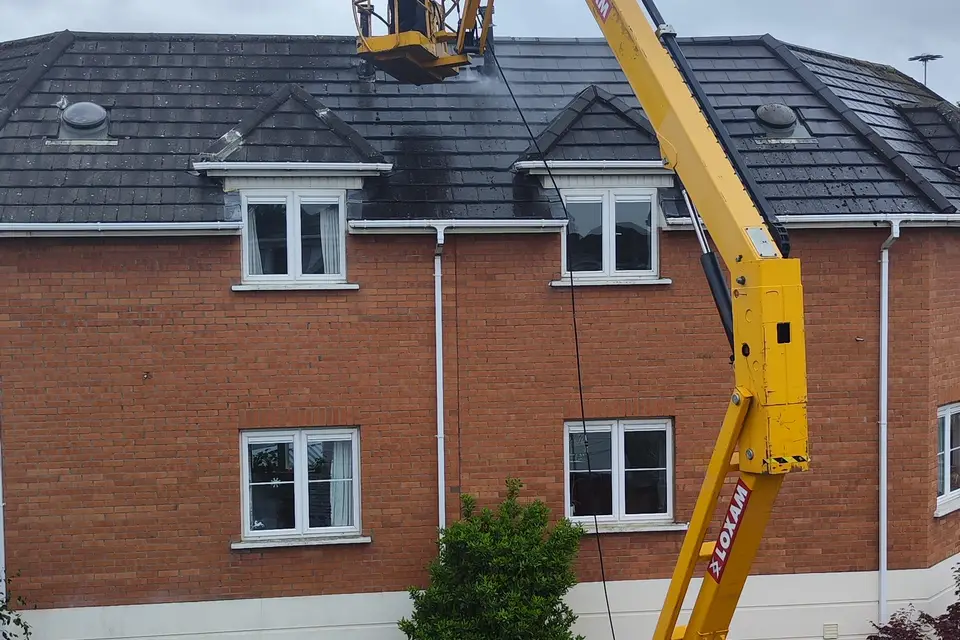
Gutter cleaning
Leaves, moss and debris cleared from gutters and downpipes, with the joints and brackets checked.
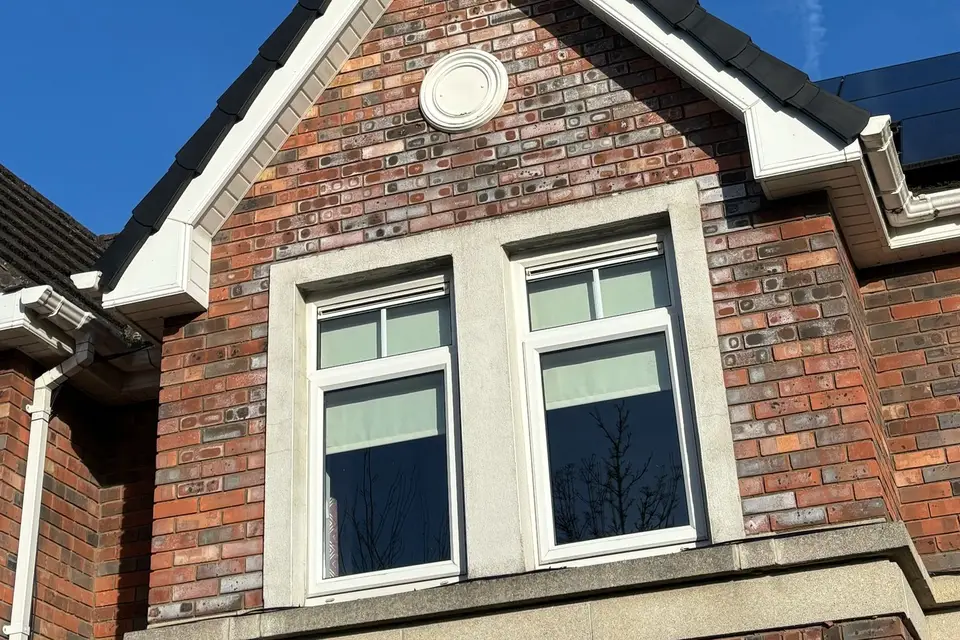
Fascia and soffits
uPVC fascia and soffit supply and fit, replacing rotten timber and improving roof ventilation.
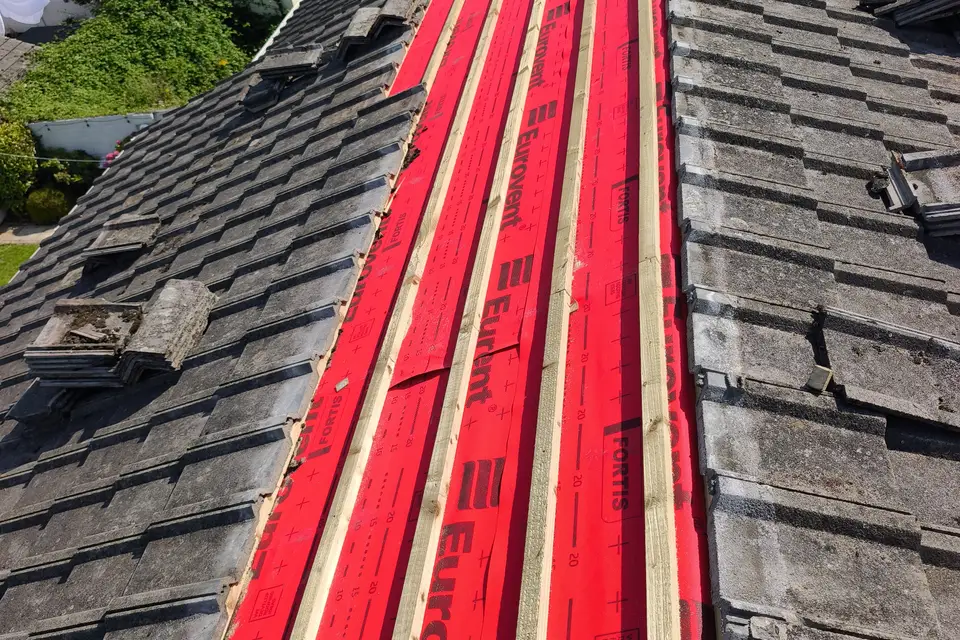
All roofing services
Every service we offer for homes and commercial properties, from inspections to full roof work.