 SA Roofing
How long does a roof last in Ireland?
Roof lifespan depends on the material, how well it was installed and how hard the weather hits it. Here is a realistic guide to each common roofing material on Irish homes.
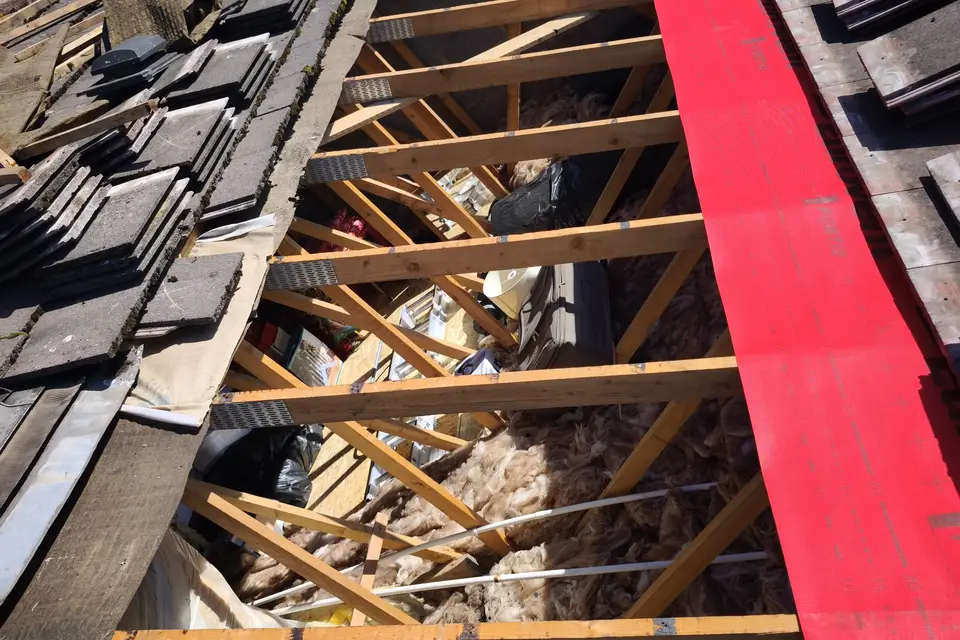
- Natural slate
- 60 to 100 years or more
- Concrete tiles
- Around 40 to 60 years
- Fibre cement slates
- Around 30 years
- Torch-on flat roof
- Around 20 to 30 years
- What fails first
- Nails, battens, felt and ridge mortar, usually before the covering itself
How long does a roof last in Ireland?
As a rough guide, a natural slate roof in Ireland lasts 60 to 100 years or more, concrete tiles around 40 to 60 years, and fibre cement slates around 30. Torch-on flat roofs typically last 20 to 30 years. The nails, battens, felt and ridge mortar usually wear out before the covering itself, so maintenance decides a lot.
What the Irish climate does to a roof
Ireland does not get the extreme heat or heavy snow loads of some countries, but it makes up for that with persistent moisture. Roofs here are wet for much of the year, which encourages moss and lichen, keeps timber battens damp if water gets past the covering, and slowly breaks down mortar. Coastal areas such as Dún Laoghaire and Howth also see salt laden air, while exposed sites take the full force of Atlantic storms several times each winter.
Repeated freeze and thaw cycles are another factor. Water that soaks into a porous tile, slate or mortar joint expands when it freezes, and over many winters that opens up cracks. Flat roofs, meanwhile, deal with ponding water and the daily expansion and contraction caused by sun and cold.
The lifespans below are broad guides. A roof that was well installed, properly ventilated and maintained can outlast them comfortably, while poor workmanship or neglect can cut them short.
Not sure what yours needs? WhatsApp us a photo and we will tell you what it looks like.
WhatsApp a photoOr get a free quoteHow long do slate and tile roofs last?
Natural slate
Good quality natural slate is one of the longest lasting roof coverings available, and many Victorian and Edwardian houses in Dublin still have their original Welsh or Irish slates. A quality slate roof can last 60 to 100 years or more. Lower grade imported slates may not last as long and can start to delaminate (split into layers) or develop rust stains from iron deposits.
In practice the slates often outlive what holds them. Original iron nails corrode, causing nail sickness, and older roofs may have no felt at all or a felt that has perished. Many slate roofs therefore need re-fixing, new battens and membrane long before the slates themselves are finished, and good slates can often be reused.
Concrete tiles
Concrete interlocking tiles are the most common covering on Irish houses built from the 1960s onwards. They typically last around 40 to 60 years. Over time the surface wears, the tiles become more porous and moss takes hold, which makes them heavier and more prone to cracking. Ridge mortar usually needs attention well before the tiles do.
Clay tiles
Clay tiles are less common in Ireland but appear on some period and higher end homes. Well made clay tiles can last 60 years or more, although lower quality tiles can suffer from frost damage in a wet climate.
Fibre cement and artificial slates
Fibre cement slates were widely used on Irish housing from the 1970s onwards. They tend to have a shorter life than natural slate, often in the region of 30 years, and older ones can curl, become brittle and lose their colour. Some older fibre cement products contained asbestos, so they should be assessed by a professional before any work is carried out.
Flat roofs: why they have shorter lives
Flat roofs have shorter lives than pitched roofs because water drains off them more slowly and the covering is exposed to direct sun and standing water.
As a rough guide, older built-up felt lasts around 10 to 20 years and a well-laid torch-on system 20 to 30 years. Our guide to how long torch-on felt lasts covers what shortens or extends that. If your flat roof is approaching these ages, our article on flat roof repair versus replacement will help you weigh up the options, and our guide to flat roof repair and replacement costs helps with budgeting.
Gutters, fascia and soffits
uPVC guttering, fascia and soffits are now standard on Irish homes and generally last 20 to 30 years or more. uPVC does not rot, but it can become brittle with age and UV exposure, and gutter joints and seals tend to fail before the gutter itself. Cast iron gutters on period homes can last far longer if they are painted and maintained, though neglected cast iron rusts through at joints and brackets. Timber fascias and soffits, still found on many older houses, depend heavily on regular painting and often rot within a couple of decades if left. Our guide to fascia and soffit problems covers the signs to look for.
Lifespans at a glance
These are typical ranges for Irish conditions and assume reasonable installation and maintenance.
- Natural slate (quality): 60 to 100 years or more
- Clay tiles: 60 years or more
- Concrete tiles: around 40 to 60 years
- Fibre cement slates: around 30 years
- Older built up felt flat roofs: around 10 to 20 years
- Torch-on flat roofs: around 20 to 30 years
- uPVC gutters, fascia and soffits: around 20 to 30 years or more
- Ridge and hip mortar: often needs repointing every 15 to 25 years
How to get the most life from your roof
Most roofs fail at the details rather than across the whole surface. A slipped slate left over a winter, a cracked flashing, a blocked valley or a gutter overflowing every time it rains will shorten the life of the timbers and felt underneath. Dealing with these small issues quickly through routine roof repairs protects the rest of the roof.
Keeping gutters and valleys clear is particularly important in Ireland, where moss and leaves accumulate quickly. Good attic ventilation matters as well, since condensation can rot battens and roof timbers from the inside even when the covering is sound.
- Have gutters cleaned at least once a year, more often near trees (how often, and what it costs)
- Replace slipped or broken slates and tiles promptly
- Check chimney flashing and ridge mortar every few years
- Keep flat roofs and outlets clear of debris and moss
- Make sure eaves ventilation is not blocked by insulation
- Get the roof looked at after any severe storm
When it is time to consider replacement
A roof that needs repairs every winter, has widespread slipped or cracked slates, sagging sections or perished felt underneath is usually approaching the point where replacement offers better value than continued patching. Age alone is not a reason to replace a roof, and plenty of old slate roofs have decades left after re-fixing, so it is worth getting an honest assessment. Older homeowners facing a big repair bill should check whether the Housing Aid for Older People grant applies.
SA Roofing works on slate, tiled and flat roofs, as well as guttering, fascia and soffits, across Dublin and the surrounding area. If you would like an honest view of how many years your roof has left, we can inspect it and tell you which parts are worn and which are sound, with a free quote for anything that needs doing now.
Frequently asked questions
How long does a slate roof last in Ireland?
Good quality natural slate can last 60 to 100 years or more. The nails, battens and felt underneath often wear out first, so older slate roofs may need re-fixing while keeping many of the original slates.
How long does a concrete tile roof last?
Concrete tiles typically last around 40 to 60 years in Irish conditions, though the nibs and the felt underneath often fail before the tiles themselves, which is why older estates see slipped tiles after storms.
Does moss shorten the life of a roof?
It can. Heavy moss holds water against slates and tiles, encourages frost damage and blocks gutters and valleys. Keeping it under control helps a roof last longer.
Is it worth replacing an old roof that is not leaking?
Usually it is not. If the covering and fixings are sound, maintenance and targeted repairs are often the better choice. Replacement makes sense when problems are widespread or repairs are becoming frequent.
How long do uPVC gutters last?
uPVC gutters generally last 20 to 30 years or more. Joints and seals often need attention earlier, and gutters can sag if brackets loosen or the fascia behind them rots.