 SA Roofing
Condensation in the attic: why it happens and how to fix it
Wet felt, damp timber and droplets on the underside of the roof do not always mean a leak. In many Irish attics the water comes from inside the house, and this guide explains how to tell the difference and what fixes it.
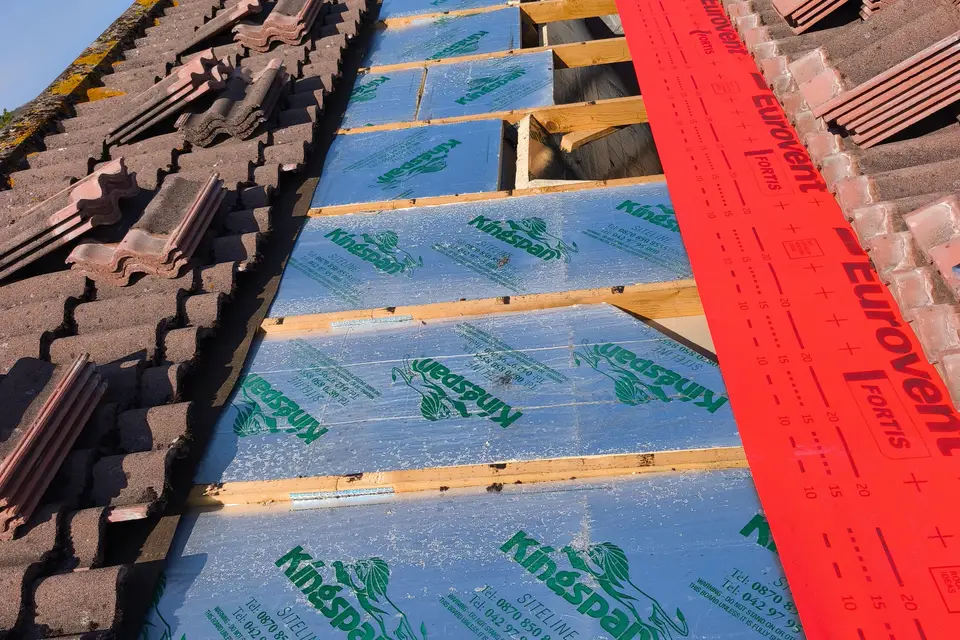
- Most likely cause
- Condensation from warm, moist air rising into a cold roof space
- Condensation or leak
- Fine droplets over a wide area point to condensation, while a leak shows in one spot during or after rain
- Common triggers
- Insulation pushed into the eaves, blocked soffit vents, fans venting into the attic
- Usual fix
- Clear the eaves, add soffit or roof vents and duct fans to the outside
Why is my attic wet if the roof is not leaking?
It is most likely condensation. Warm, moist air from the house rises into a cold roof space and turns to water on the underside of the felt and timbers, especially on cold, still mornings and after an insulation upgrade. Fine droplets spread across a wide area point to condensation. A leak usually shows in one spot during or after rain.
Finding water in the attic is worrying, and most people assume the roof is leaking. Sometimes it is, but the fix for condensation is completely different. Replacing slates will not cure condensation, and better ventilation will not stop a leak, so it is worth working out which you have before spending money. A roofer can check the roof from outside and the attic from inside as part of a roof repairs inspection, and the fascia and soffits at the eaves are often where the answer lies. These clues help tell the two apart.
- Condensation shows as fine droplets or general dampness spread across a wide area of felt, timber or nail tips, while a leak is usually concentrated in one spot.
- Condensation is worst on cold, still mornings, often in dry weather, while a leak appears during or soon after rain, often with wind from a particular direction.
- Condensation leaves black mould on the underside of the roof boards or felt and rusty nail tips across the roof.
- A leak leaves a drip line, a tide mark on a rafter, or a wet patch of insulation below one point.
If it looks like a leak
Our guide to what causes roof leaks covers the common leak points on Irish roofs in more detail.
Why attics get wet after insulation upgrades
Older Irish houses were draughty and their attics had little insulation. Heat escaped through the ceiling and kept the roof space relatively warm, and plenty of draughts carried moisture away. When thick insulation is added, as many homes have done to save energy, the attic above it becomes much colder. Warm, moist air from the house still finds its way up through gaps around light fittings, the attic hatch, pipes and cables, and when it meets the cold underside of the roof it condenses into water.
The colder the roof space, the more ventilation it needs to carry that moisture away. If the upgrade did not include ventilation, or the new insulation blocked the existing vents, condensation is a common result, often appearing in the first winter after the work.
Not sure what yours needs? WhatsApp us a photo and we will tell you what it looks like.
WhatsApp a photoOr get a free quoteVentilation at the eaves and ridge
A cold attic is ventilated by air moving through it, in at the eaves and out near the top. At the eaves, air comes in through vents in the soffit or over the fascia, and higher up, tile or slate vents and ridge vents let it out again. The air path has to be clear the whole way, and a gap between the insulation and the underside of the roof at the eaves keeps it open.
Many Dublin houses built before the 1990s have no eaves ventilation at all, or vents that were painted over or covered when timber soffits were replaced. Fitting vented uPVC soffits or over-fascia vents when the roofline is renewed is one of the most effective ways to add it. Our guide to fascia and soffit problems explains the venting options.
Blocked soffit vents and insulation pushed into the eaves
The most common cause of condensation after an upgrade is insulation pushed right into the eaves, where it blocks the air coming in from the soffit. Rolls of quilt are often laid all the way to the edge to avoid cold spots, which is understandable, but without a gap above them the vents are useless. Plastic eaves trays, sometimes called rafter trays or insulation stops, hold the insulation back and keep a clear channel for air to reach the roof space.
Vents can also be blocked from outside, by paint, by birds' nests or by old soffit boards covered over with new ones. Looking at the soffit from outside and at the eaves from inside the attic usually shows whether air can get in.
Bathroom and kitchen fans venting into the attic
An extractor fan that blows into the attic instead of outside is a frequent cause of heavy condensation, usually concentrated around one area. Every shower sends a burst of warm, wet air straight into the coldest part of the house. The fan duct should run to an outlet through a wall, the soffit or a dedicated roof vent, and ducts that have come loose, been cut short or simply end in the insulation are worth checking whenever an attic is damp.
Everyday habits add moisture too. Drying clothes indoors, cooking without a lid or an extractor, and closed or blocked trickle vents in windows all raise the humidity in the house, and some of that ends up in the attic. Reducing moisture at the source makes the ventilation work less hard.
Fixes and who to call
Most attic condensation is fixed with a combination of measures: clearing the eaves, fitting eaves trays, adding soffit or over-fascia vents, adding tile, slate or ridge vents higher up, sealing the gaps around the attic hatch and fittings, and making sure extractor fans vent outside. On houses with timber fascias and soffits that need replacing anyway, renewing the roofline with vented uPVC is a natural point to sort out the ventilation.
A roofer is a good first call, because the same visit can rule out a leak and check the eaves, fascia, soffits and roof ventilation. If the attic needs more insulation work or the house needs a ventilation plan, a retrofit or insulation specialist can help. If the attic is wet, a photo of the underside of the felt and one of the soffit from outside usually tells us whether we are looking at a leak or condensation, and we confirm the work and the price after a free inspection.
Frequently asked questions
Does a wet attic always mean the roof is leaking?
No. Many wet attics in Ireland are caused by condensation, when warm, moist air from the house condenses on the cold underside of the felt and timbers, especially on cold, still nights. A leak usually shows in one spot and is linked to rain.
Why did condensation start after my attic was insulated?
Extra insulation makes the attic colder, so moisture condenses more readily, and insulation pushed into the eaves often blocks the soffit vents. Fitting eaves trays to restore the air gap and adding ventilation usually solves it.
Is condensation in the attic a problem?
Not immediately, but left for several winters it can cause mould, wet and less effective insulation, rusting nails and rot in battens and roof timbers, so it is worth fixing.
Who should I call for condensation in the attic?
A roofer is a sensible first call, because they can rule out a leak and check the eaves, soffits and roof ventilation on the same visit. For wider insulation or whole-house ventilation, a retrofit specialist can advise.
Can a bathroom fan cause condensation in the attic?
Yes. A fan that discharges into the attic, or a duct that has come loose, sends warm, wet air straight into the roof space. The duct should always run to an outlet outside.