 SA Roofing
What causes roof leaks in Irish homes
Finding where water is getting in is the hardest part of fixing a leak. These are the most common causes on Dublin houses, and how to tell a real leak from condensation.
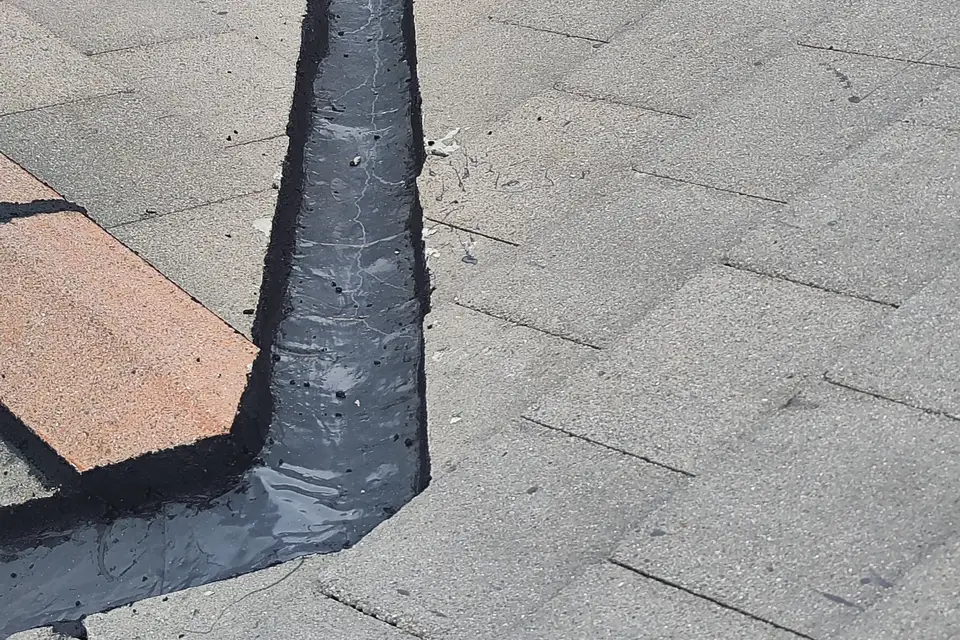
- Most common causes
- Failed lead flashing, slipped or cracked slates and tiles, worn valleys
- Also
- Blocked gutters and flat roof upstands
- Hard to trace because
- Water runs along the felt and rafters before it shows
- Could be condensation
- Fine droplets over a wide area point to condensation, not a leak
What is the most common cause of a roof leak?
On Irish houses, most roof leaks come from failed lead flashing around chimneys and walls, slipped or cracked slates and tiles, and worn valleys where two roof slopes meet. Blocked gutters and flat roof upstands cause many of the rest. The stain inside is often some distance from the cause, because water runs along the felt and rafters first.
Why roof leaks can be hard to trace
Water rarely drips straight down from the point where it enters a roof. It can run along the felt, follow a rafter or travel across the top of a ceiling before it finds a way through, so the stain you see indoors is often some distance from the actual cause. Wind direction matters too. Plenty of Irish roofs stay dry in steady rain and only leak when a strong south westerly drives water uphill under slates or around a chimney. Our guide to a roof that only leaks in heavy rain matches each leak pattern to its likely cause.
Knowing the common causes helps you describe the problem to a roofer and makes the inspection quicker.
Not sure what yours needs? WhatsApp us a photo and we will tell you what it looks like.
WhatsApp a photoOr get a free quoteThe most common causes
Damaged or failed flashing
Flashing is the lead (or sometimes other material) that seals the junctions where the roof meets a wall, chimney, dormer or rooflight. Lead flashings are tucked into the mortar joints of the brickwork and dressed over the slates. Over the years the mortar can crack and the lead can split, lift in wind or be stolen. Poor quality mortar fillets used instead of lead are another frequent source of leaks, as they shrink and crack away from the wall.
Slipped, cracked or missing slates and tiles
Each slate or tile overlaps the ones below to shed water. When one slips, cracks or blows off, it leaves a gap where rain reaches the felt and battens directly. On older natural slate roofs, nail sickness causes slates to slide one after another. Concrete tiles are tougher but can crack from impact, frost or foot traffic.
Valleys
A valley is the internal angle where two roof slopes meet, and it carries a large volume of water in heavy rain. Valleys are usually lined with lead or a preformed liner. Splits in the lead, debris and moss building up, or mortar that has broken away along the edges can all let water in, often showing as a stain on an upstairs ceiling near a corner.
Chimneys
Chimneys are one of the biggest sources of leaks on older Dublin homes. Water can get in through failed flashing, cracked flaunching (the mortar around the pots on top of the stack), porous or badly pointed brickwork, or an uncapped flue that lets rain straight down. Damp patches on the chimney breast inside, often on the top floor, are the giveaway.
Ridge and hip tiles
Ridge and hip tiles bedded in mortar can work loose as the mortar ages. Gaps let wind driven rain into the top of the roof, and loose tiles may blow off altogether in a storm. If that happens, our guide on what to do in a roofing emergency explains how to keep the house safe and dry until a roofer arrives.
Blocked or damaged gutters
When gutters are full of leaves, moss and silt, water backs up and overflows. In bad cases it runs behind the fascia and soaks into the top of the wall or into the eaves, which can look very like a roof leak from inside. Leaking gutter joints and downpipes cause similar damp patches lower down. Having the gutters cleared once a year prevents a lot of these, and our guttering services cover the repairs.
Flat roof defects
On extensions and dormers, splits, blisters, failed upstands and ponding water are the usual culprits. Our article on flat roof repair versus replacement explains how to judge how serious these are.
Condensation or a real leak
Warm, moist air from the house can condense on the cold underside of the felt, especially after an insulation upgrade, and drip onto the ceiling, so a wet attic does not always mean the roof is leaking. Fine droplets spread over a wide area on cold, still mornings point to condensation, and our attic condensation guide explains how better ventilation cures it.
What you can check yourself
- Note exactly when the leak appears, how heavy the rain was and which way the wind was blowing
- Look from the ground for missing slates, damaged flashing or a cracked chimney
- Watch the gutters in heavy rain for overflowing water
- Check the attic with a torch for damp timber, drip marks and wet insulation
- Look for widespread droplets or mould, which point to condensation
- Take dated photos of any stains so you can see if they grow
Getting the leak found and fixed
Please leave the climbing to a roofer, as wet slates and moss are treacherous and a fall from even a single storey roof can be serious. A proper inspection should cover the area around the leak and the obvious suspects nearby, such as the chimney, valleys and flashings, so the repair fixes the cause rather than the symptom.
If you have water coming in now, our emergency roof repairs service is available 24/7 to make the roof watertight. For leaks that can wait for a planned visit, we carry out roof leak repairs on slate, tiled and flat roofs across Dublin and the surrounding area. Our guide to roof repair costs in Dublin also gives an idea of what to budget. Tell us when the leak appears and which way the wind was blowing, send a photo of the stain if you can, and we will inspect the roof to find where the water is getting in, then quote for the repair free of charge.
Frequently asked questions
Can a blocked gutter cause a leak inside the house?
Yes. Overflowing water can run behind the fascia into the eaves or down the inside face of the wall, causing damp patches near the ceiling of upstairs rooms that look very similar to a roof leak.
Do chimneys that are no longer used still cause leaks?
They can. Disused chimneys still have flashings, flaunching and brickwork exposed to the weather, and an uncapped flue lets rain straight in. Capping and maintaining the stack, or removing it where appropriate, solves this.
Can a blocked valley cause a leak?
Yes. A valley carries the water from two roof slopes, so moss and leaves building up in it hold that water back until it spills over the edge of the lining and runs in under the slates or tiles. The damp usually appears on an upstairs ceiling close to a corner of the house.
Can nail sickness cause a roof leak?
Yes. When the original nails rust through, slates slide down and leave a gap for rain to reach the felt and battens. Our guide to slipped slates explains how they are refixed.