 SA Roofing
Birds and bats in the roof: what the law says and what to do
Starlings in the soffits and bats in the attic are common in Dublin houses, and both are protected by law. This guide explains what you can and cannot do, when roof work can go ahead, and how the eaves are closed up afterwards.
- Nests with eggs or young
- Protected under section 22 of the Wildlife Act, so work on that part of the roof waits until the young have left
- Bats
- Their roosts are protected all year round under the Habitats Regulations, even when the bats are away
- Who to contact about bats
- The National Parks and Wildlife Service, before any work that could affect a roost
- Keeping birds out afterwards
- New uPVC soffits and vents with openings too small for birds, while keeping the attic ventilated
Why birds and bats move into your roof
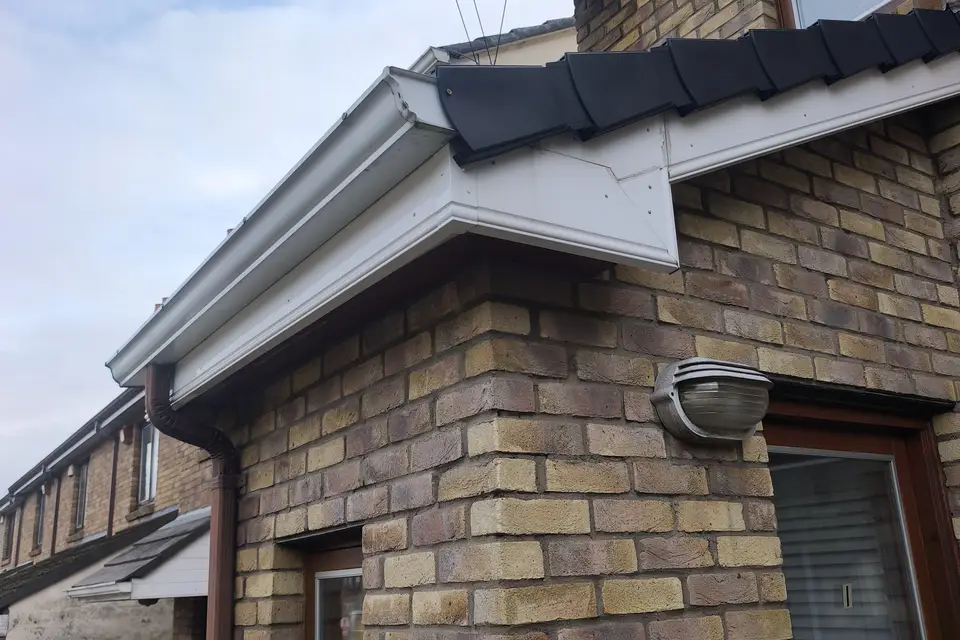
The eaves of an older house offer exactly what a small bird is looking for, a dry, sheltered gap out of reach of cats. Timber soffits shrink and rot, boards come loose at the corners, and the ends of the bottom row of tiles leave openings that lead straight into the roof space. Starlings and house sparrows commonly use these gaps on Dublin houses, and once a pair has nested successfully they tend to come back the following spring. Our fascia and soffits page explains how the roofline is put together and where those gaps usually are.
Bats use roofs too, often without the people living below ever noticing. They can roost behind soffits and fascia boards, under slates, tiles and ridge tiles, and in the roof space itself. They are small, they squeeze through very narrow gaps, and they leave little trace apart from droppings.
Birds bring nest material, droppings and sometimes mites into the roof space, and nests packed into the eaves can block the vents that keep the attic dry. That is a nuisance, but it is never a reason to break the law, and the fix is a matter of timing.
Signs birds or bats are using the roof
A few minutes watching the eaves on a spring morning or a summer evening usually tells you what is going on.
- Birds flying in and out of the same spot at the eaves, often carrying food or nest material, in spring and early summer.
- Chirping or scratching from inside the eaves or the roof space, which gets louder as the young grow.
- Twigs, grass and feathers in the gutters, or droppings on the wall and windowsill below a gap.
- Small dark droppings gathered below a gap or on the attic floor, which in the case of bats are dry and crumble to dust when rubbed.
- Bats leaving the roof at dusk, usually one at a time from the same gap.
Not sure what yours needs? WhatsApp us a photo and we will tell you what it looks like.
WhatsApp a photoOr get a free quoteWhat the law says about nests
Wild birds and their nests are protected by the Wildlife Act 1976, as amended. Section 22 of the Act makes it an offence to wilfully take, remove, destroy or injure the eggs or nest of a protected wild bird, and to wilfully disturb a protected wild bird on or near a nest that contains eggs or unflown young.
There is an exception for nests built in or on an occupied building, which can be removed, but it does not apply while the nest contains eggs or young. In practice this means a nest in your eaves that is being used for breeding has to be left alone until the young have flown. Once they have gone and the nest is empty, the old material can be cleared out and the gap closed so the birds cannot return.
What the law says about bats
All Irish bat species are strictly protected under the EU Habitats Directive, which Ireland applies through the European Communities (Birds and Natural Habitats) Regulations 2011. Under those regulations it is an offence to damage or destroy a breeding site or resting place of a bat, so a roost is protected all year round, including the months when the bats are elsewhere. The National Parks and Wildlife Service enforces this protection.
Work that would affect a roost needs a derogation licence from NPWS before it starts. For homeowners, NPWS also offers a Domestic Dwelling Derogation, which usually involves a member of NPWS staff visiting the house and recommending how the bats can be safely excluded. A single bat that has strayed into a room is a different matter, and NPWS advises closing it into that room and opening a window or door so it can find its own way out.
What to do if birds or bats are in your roof
The sensible course is to plan around them rather than react. These steps keep you on the right side of the law and avoid a job being stopped halfway through.
- Do not block, seal or fill a gap that birds or bats are using, because that can trap young birds inside or cut off a roost.
- Note what you see and when, and take a photo or a short video from the ground if you can.
- If birds are nesting, wait until the young have flown before any work is done on that part of the roof.
- If you think bats are present, contact NPWS for advice before booking any roof or roofline work.
- Tell your roofer before they quote, so the timing and method can be planned from the start.
Timing roofline work
Most birds nest in spring and summer, so fascia, soffit and gutter work planned for autumn or winter avoids most clashes, although a nest that is in use is protected whenever it is. If you can see birds going in and out of the eaves, mention it when you ask for a quote and we will plan the timing around it.
Keeping birds out afterwards
Once the eaves are clear of nests, and bats are not an issue, the long-term answer is a roofline without gaps. Replacing old timber with uPVC fascia and soffits closes off the openings behind the boards, and vented soffits or over-fascia vents let air into the attic through slots too small for birds. On tiled roofs, the gap under the curved edge of the bottom row of tiles can be closed with an eaves filler or comb that blocks birds but still lets air through.
Ventilation is the detail that matters most here. Stuffing gaps with mortar, foam or insulation keeps birds out but can also block the air path at the eaves, and in a well-insulated attic that often leads to wet felt and mould, as our guide to condensation in the attic explains. A properly detailed roofline does both jobs at once, and the options are set out in our guide to fascia and soffit problems. Where bats use the roof, any change to the gaps they rely on should follow NPWS advice.
Getting the work done
If birds have been getting into your eaves, or the soffits are rotten and gappy, we can inspect the roofline and give you a free, no-obligation quote for uPVC fascia and soffits, planned around any nests. Tell us about any birds or bats when you get in touch, along with a photo of the eaves if you can take one safely from the ground, and call 085 172 1435, send a WhatsApp or contact us for a free quote.
Frequently asked questions
Is it illegal to remove a bird's nest from my roof?
It is an offence under section 22 of the Wildlife Act to wilfully take, remove or destroy the nest or eggs of a protected wild bird. A nest built in or on an occupied building can be removed once it no longer contains eggs or young, so the safe approach is to wait until the young have flown.
What time of year suits roofline work if birds nest in my eaves?
Autumn and winter, when most birds are not nesting. A nest in use is protected at any time of year, so if birds are still active the work on that section waits until they have gone.
What should I do if I think bats are in my attic?
Leave them undisturbed and contact the National Parks and Wildlife Service for advice before any roof work. Bat roosts are protected all year round, and works that would affect a roost need an NPWS derogation licence first.
Can I block the hole birds use to get into the roof?
Not while a nest in there has eggs or young, as that would trap or harm the birds. Once they have left, the gap can be closed properly, ideally in a way that keeps the eaves ventilated.
Will new uPVC soffits stop birds nesting in the eaves?
They close off the gaps that birds use behind old timber boards, and vented soffits let air in through openings too small for birds. On tiled roofs an eaves filler at the bottom row of tiles may also be needed.