 SA Roofing
Roof repair grants in Ireland: what can and cannot help
There is no general grant for fixing a roof in Ireland, but two schemes can pay for roof work in the right circumstances. This guide explains which ones help, which ones do not, and what to have ready before you apply.
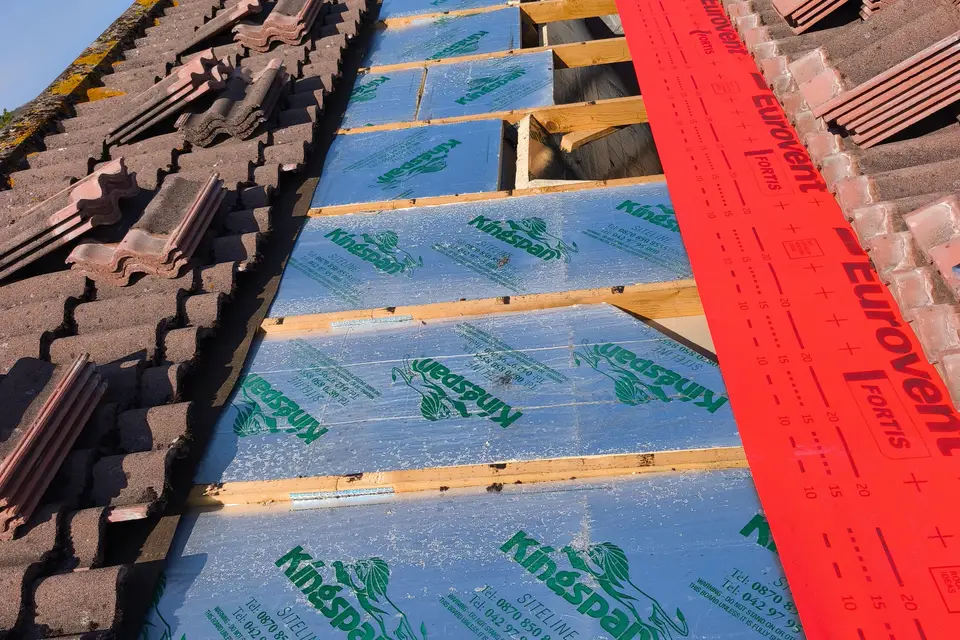
- Main roof repair grant
- Housing Aid for Older People, through your local council, for people aged 66 or over and means-tested
- Vacant homes
- The Vacant Property Refurbishment Grant includes roof works on qualifying vacant or derelict properties
- SEAI grants
- Attic insulation and other energy upgrades, with no money for repairs to slates, tiles or felt
- Most important rule
- Get written approval of the grant before any work starts
Is there a grant for roof repairs in Ireland?
For most homeowners there is no grant that pays for ordinary roof repairs, but there are two exceptions. The Housing Aid for Older People Scheme, run by local councils, can pay for necessary repairs such as roof work in the homes of people aged 66 or over, and the Vacant Property Refurbishment Grant covers roof works when a vacant or derelict house is being brought back into use. SEAI grants help with attic insulation but not with the roof covering itself, and the Housing Adaptation Grant is for disability adaptations rather than repairs.
Grant rules and amounts change, sometimes more than once a year. Everything below was checked against the official pages linked in each section on 6 October 2026, but please confirm the current position with your council or SEAI before you start, because a grant that is missed on a technicality is usually lost for good.
Housing Aid for Older People Scheme
This is the scheme most likely to help with a leaking or failing roof. According to the Department of Housing's page on the scheme, it is there to help older people living in poor housing conditions to have necessary repairs or improvements carried out, and it lists structural repairs such as roof repairs alongside rewiring and heating. It is for people aged 66 or over, and in cases of hardship it can sometimes be paid to people under 66. Local authorities run it, so in Dublin you apply to Dublin City Council, South Dublin, Dún Laoghaire-Rathdown or Fingal, depending on where you live.
The grant is means-tested on the gross household income of the owner and their spouse for the previous tax year. The effective maximum is €10,700, which can cover up to 100% of the approved cost of the works for households with an income of up to €37,500. The percentage then tapers, and no grant is payable above €75,000.
- Income up to €37,500: 100% of costs, up to €10,700
- €37,501 to €43,750: 85%, up to €9,095
- €43,751 to €50,000: 75%, up to €8,025
- €50,001 to €62,500: 50%, up to €5,350
- €62,501 to €75,000: 30%, up to €3,210
What the council asks for with a roof application
Dublin City Council's guidance says that for roof repairs or replacement you need a letter from your insurance company stating that the repairs are not covered under your policy. The council then sends a technician to look at the house, writes to you with the amount approved, and asks for details from the contractor, such as a quote and their tax reference number. The application form is clear that the grant must be approved before any work begins, and gov.ie warns that starting early means the application is rejected. If you are unsure whether an older roof needs repairing or replacing, our guide to how long a roof lasts in Ireland gives typical lifespans for each covering.
Not sure what yours needs? WhatsApp us a photo and we will tell you what it looks like.
WhatsApp a photoOr get a free quoteVacant Property Refurbishment Grant
If you own or are buying a house that has been empty for two years or more and was built before 2008, the Vacant Property Refurbishment Grant can pay towards bringing it back into use as a home to live in or to rent. The gov.ie summary of vacant property supports puts the maximum at €50,000 for a vacant property and €70,000 for a derelict one, inclusive of VAT, and local authorities run the scheme.
Roof work is clearly within it. The scheme outline published in March 2026 lists the roof structure under superstructure works, and roof finishes, fascias, soffits and rainwater goods under external completions, each with its own cap. The council needs a quotation for the proposed works, approved works must be finished within 18 months, and the grant is paid on completion after the council has inspected the work. Properties on qualifying offshore islands get higher limits of €60,000 and €84,000.
SEAI grants: insulation, not roof repairs
SEAI grants pay for energy upgrades, so the cost of fixing slates, tiles, flashings or felt is not part of them. What they do cover is attic insulation, and SEAI's attic insulation page sets fixed grants of €2,000 for a detached house, €1,500 for a semi-detached or end of terrace house, €1,400 for a mid-terrace house and €1,100 for an apartment. Higher amounts of €2,500, €1,900, €1,800 and €1,400 apply to first-time buyers who bought on or after 1 January 2025, homeowners receiving Department of Social Protection welfare payments, and landlords with an active HAP or RAS tenancy.
The home must have been built and occupied before 2011, the work must be done by an SEAI registered contractor, and you need grant approval before the work starts. If the roof is leaking it should be repaired before new insulation goes in, since wet insulation stops working. Good ventilation at the eaves matters too, as our guide to condensation in the attic explains. Homeowners on certain social welfare payments may also qualify for free upgrades under SEAI's Warmer Homes Scheme.
Housing Adaptation Grant: for disability, not roofs
The Housing Adaptation Grant for Disabled People is often mentioned alongside the older people's scheme because both use the same application form. It pays for works that make a home more suitable for a disabled person, such as a ramp, an accessible shower or downstairs toilet, a stair lift or an extension, and the gov.ie page on the grant puts the effective maximum at €40,000. Repairing a roof does not adapt a house for a disability, so roof work on its own falls outside it. If the person needing the work is 66 or over, the Housing Aid for Older People Scheme is the one to look at.
Which schemes can help with roof work
This table sums up the four schemes most often mentioned for roof work. Always check the official page for the current rules before you apply.
| Scheme | Can it help with roofs | Who administers | Where to check |
|---|---|---|---|
| Housing Aid for Older People | Yes, necessary repairs such as roof repairs, for people aged 66 or over, means-tested | Your local council | gov.ie |
| Vacant Property Refurbishment Grant | Yes, roof structure and roof finishes on vacant or derelict homes built before 2008 | Your local council | gov.ie |
| SEAI attic insulation grant | Insulation only, with no money for repairs to the roof covering | SEAI | seai.ie |
| Housing Adaptation Grant for Disabled People | No, it pays for disability adaptations | Your local council | gov.ie |
How to apply and what quotes you need
Start with the housing grants section of your council, or SEAI for insulation, and confirm that you qualify before spending money. For the older people's scheme, gather proof of household income, proof that Local Property Tax is up to date and, for roof work, the letter from your insurer. If the damage came from a storm, talk to your insurer first anyway, because sudden storm damage is often covered by home insurance and that is usually quicker than a grant.
Every scheme here expects a quote for the work, and the council or SEAI will want to see that the price matches the job. Keep copies of everything you send and wait for the written approval before anyone starts. The grant is paid after the work is finished and checked, so you may need to pay the contractor first and claim the money back. For a sense of what to budget, our guide to roof repair costs in Dublin gives rough ranges.
Getting a written quote from us for your application
If you are applying for a grant that covers roof work, we can inspect the roof and give you a free written quote that sets out the work needed and what it includes, ready to go in with your application. We can tell you what the roof needs, but whether you qualify is for your council or SEAI to decide, so please check that with them. If the council asks for the contractor's tax details, mention it when you ask for the quote. You can read more about SA Roofing, and when you are ready, call 085 172 1435, send a WhatsApp or ask us for a written quote.
Frequently asked questions
Can I get a grant to replace my roof in Ireland?
Only in specific cases. The Housing Aid for Older People Scheme can cover roof repairs or replacement for people aged 66 or over, subject to a means test, and the Vacant Property Refurbishment Grant includes roof works on qualifying vacant or derelict homes. Check with your local council before you start.
Does the SEAI pay for roof repairs?
No. SEAI grants pay for energy upgrades such as attic insulation, so repairs to slates, tiles, flashings or felt are not covered. Any leak should be fixed before new insulation goes in.
Can I start the roof work before the grant is approved?
You should not. The council schemes require written approval before any work begins, and SEAI also requires grant approval first. Starting early can mean the application is rejected.
Do I need a quote to apply for a roof repair grant?
Yes. The council will ask for a quote from the contractor doing the work, and may ask for their tax reference number so it can check tax clearance. We give free written quotes after inspecting the roof.
Will the council grant pay if my home insurance covers the damage?
For roof work under the Housing Aid for Older People Scheme, councils ask for a letter from your insurer stating that the repairs are not covered by your policy. If the damage came from a storm, contact your insurer first.