 SA Roofing
Missing or slipped roof tile: what to do
A gap in a tiled roof after a windy night is one of the most common calls a roofer gets. This guide covers concrete and clay tiles: how urgent a missing tile is, what to do first and how it is fixed.
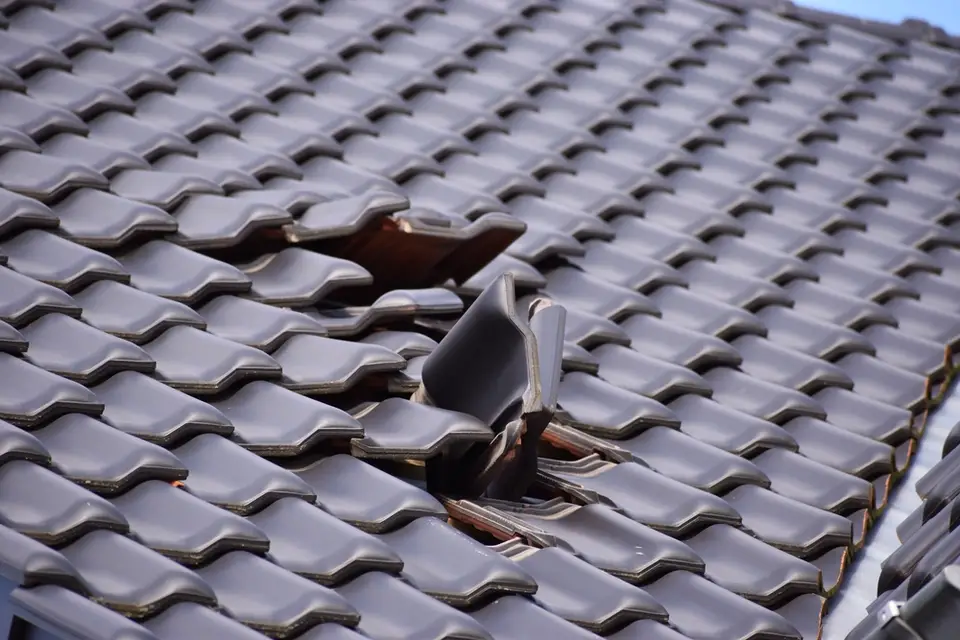
- Urgent if
- Water is coming in, tiles hang over a path, or several have moved
- First steps
- Keep clear below, check the ceiling, photograph from the ground
- Usual cause
- Broken nibs, unfixed tiles lifted by wind, or soft battens
- Old profiles
- Often no longer made, so reclaimed tiles are used
Is a missing roof tile an emergency?
One missing tile is not usually an emergency, but it needs fixing soon. The felt under the gap is now exposed to rain and sunlight, wind can get under the tiles beside it, and a single gap often becomes several after the next storm. It becomes urgent when water is coming in, when tiles are hanging loose over a path or driveway, or when a whole row has moved, and in those cases our emergency roof repairs line runs 24/7. For everything else, booking tile repairs within days rather than weeks is the sensible step.
This guide covers concrete and clay tiles, which are on most post-war Dublin houses. If your roof is natural slate, our guide to slipped slates explains the different causes and fixes.
What to do in the first hour
Please do not climb up to look or try to push the tile back. Concrete tiles are heavy and crack underfoot, moss makes them slippery, and a ladder resting against a gutter is unstable. Our guide on what to do in a roofing emergency has more on staying safe while you wait.
- Keep people and pets away from the area below the gap, because more pieces can follow.
- Check the ceiling below and, if it is safe, the attic for damp or daylight.
- Put a bucket under any drip and move belongings out of the way.
- Photograph the roof from the ground and keep any fallen pieces.
- Call a roofer, and send the photos by WhatsApp if you can.
Not sure what yours needs? WhatsApp us a photo and we will tell you what it looks like.
WhatsApp a photoOr get a free quoteWhy concrete tiles slip and blow off
Concrete interlocking tiles hang on the timber battens by small nibs on their underside, and the overlap with the tiles around them holds them in place. On many roofs built from the 1960s to the 1990s only some of the tiles were nailed or clipped, so a tile on an unfixed course relies on its nibs and its own weight. When a nib snaps, often from frost or from someone walking on the roof, the tile slides down. Wind is the other cause. Gusts lift tiles along the verges, at the eaves and near the ridge, where the roof is most exposed, and an unfixed tile can be lifted out completely.
BS 5534, the British Standard widely used in Ireland, now expects every tile on a new roof to be mechanically fixed, but that was not the practice when most Dublin estates were built. Battens matter too. If a batten has rotted at the eaves, where old felt has let water in, the nibs have nothing firm to hang from.
Clay plain tiles, found on some 1930s houses, are smaller and overlap twice. They hang on nibs as well and were often nailed only every few courses, so they slip when nibs break or nails rust, much as slates do.
Can a single tile be replaced?
Yes. A roofer lifts the tiles above the gap slightly, slides the new tile into position so its nibs hook over the batten, and fixes it with a clip or nail where the roof allows. Before it goes in, the felt and batten underneath are checked, since the gap may have let water in for some time. On a roof in reasonable condition, replacing a few tiles is a small job, and our guide to roof repair costs in Dublin gives a rough range. Where the gap is at a verge or the eaves, the mortar or clips along that edge are checked too, because a loose edge is often why the tile came out in the first place.
Finding a match for an old tile
Many concrete tile profiles used on Dublin estates in the 1970s and 1980s are no longer made. A new tile of a different profile will not interlock with the old ones, so it either sits proud or leaks at the side lap. The usual answer is a reclaimed tile of the same profile, and where none can be found, tiles can be taken from a less visible slope at the back and the gap there filled with the closest modern tile. Weathered tiles also differ in colour from new ones, which matters on a front slope. Our pages for roofers in Finglas and roofers in Tallaght describe the tile roofs on those estates.
Clay tiles are easier to match in size, but colour and texture vary between makers, so reclaimed tiles are often the better match there too.
When several tiles keep slipping
Tiles slipping in different places every winter usually point to a roof-wide problem rather than bad luck. On an older concrete roof the nibs may be breaking because the tiles have become brittle, the battens may be soft, or the original felt may have perished so that each gap lets water straight onto the timber. Loose ridge and verge mortar often goes at the same time. At that stage it is worth an honest assessment of whether another round of repairs will last, and our checklist of the signs your roof needs repair shows what to look for from the ground.
Booking a repair
Send a photo of the gap taken from the ground, your address and whether any water is getting in. We look at the gap and the roof around it, check the felt and battens, and give you a free quote before any work is done. If a tile has fallen and water is coming in, ring 085 172 1435.
Frequently asked questions
Will a slipped roof tile cause a leak?
Often, though not always straight away. The tile above may still cover part of the gap, but rain reaches the felt and battens, and on older roofs with brittle felt the water soon gets into the attic. It should be refixed before the next spell of bad weather.
Can I replace a roof tile myself?
It is not a safe job to do yourself. Tiles break underfoot, mossy roofs are very slippery and a fall from a two-storey roof can be fatal. Fitting a tile also means lifting the ones above it without cracking them, which is a job for a roofer.
Why do roof tiles blow off in storms?
On many older roofs only some tiles were nailed or clipped, so wind getting under the edges at the verges, eaves and ridge can lift unfixed tiles out. Broken nibs and soft battens make it easier.
Can a different tile profile be used to fill a gap?
No, not on the same slope, because a different profile will not interlock with the tiles around it and can leak at the side lap. A reclaimed tile of the same profile, or one taken from a hidden slope, is the usual answer.
Is a slipped ridge tile the same problem?
It has a different cause. Ridge tiles are bedded in mortar or held by a dry ridge system, and they come loose when the mortar cracks or the fixings fail. Our roof repairs page explains how ridges are refixed.