 SA Roofing
Water pooling on a flat roof: what is normal and how to fix it
Puddles on a flat roof after rain are common, but some ponding is a warning sign. This guide explains how much standing water is acceptable, why it happens and how it is fixed properly.
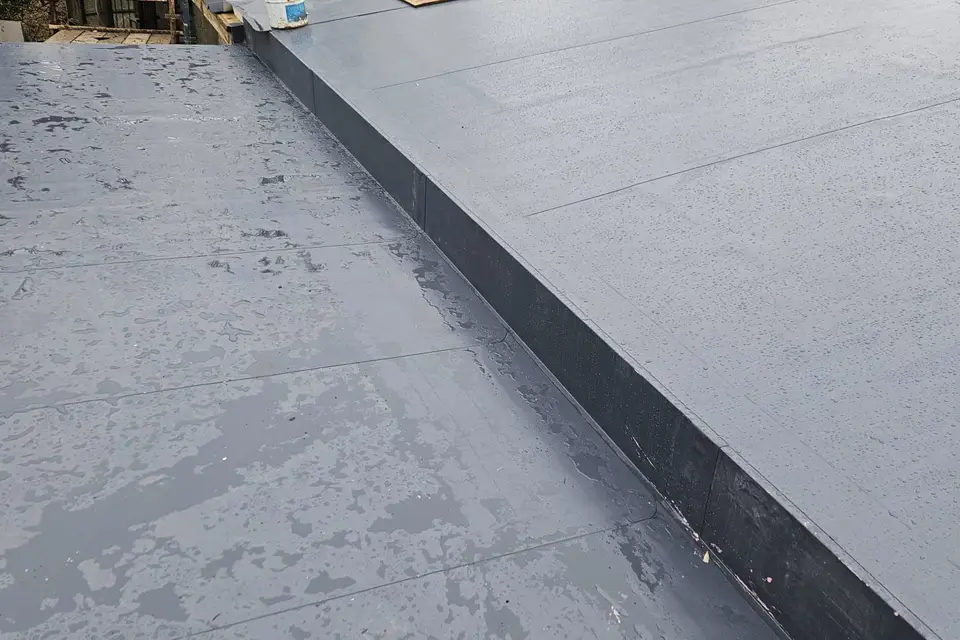
- Normal
- A little standing water that is gone within about 48 hours
- Ponding
- Water that lasts longer, keeps coming back or grows
- Usual causes
- A sagging deck, poor falls or a blocked outlet
- Lasting fix
- Clear the outlet first, then restore the fall if the deck has dipped
Is ponding on a flat roof normal?
A little standing water after rain is normal, but it should be gone within about 48 hours in reasonable drying weather. Water that lasts longer, returns to the same spot after every shower or grows over time is ponding. It stresses the felt and seams and usually means the deck has sagged or an outlet is blocked.
On older roofs, shallow puddles in the odd spot are almost expected, but a pond that keeps growing is worth having looked at as part of a flat roof repair inspection.
Irish weather makes this harder to judge, because in a wet spell the roof may not get 48 dry hours for weeks. A practical test is to look at the roof on the first dry, breezy day after rain, from an upstairs window if you can, and note the size and position of any puddles. Photos taken over a few weeks show whether a pond is growing.
Why water pools on a flat roof
A flat roof is built with a slight fall, so rain runs towards a gutter or outlet. Ponding happens when that fall is lost or was never there, usually for one of these reasons.
- A sagging deck. Timber decking that has got wet softens and dips between the joists, and chipboard decks are particularly prone to it.
- Undersized joists, which bend under the weight of the roof and any water sitting on it.
- Poor original falls. Some extension roofs were laid almost level, or with firrings that did not create enough slope.
- Blocked outlets and gutters. Leaves, moss and mineral granules washed off the felt block the outlet, so water backs up across the roof.
- Patches and overlays. Repairs laid on top of the old covering can create ridges that dam water behind them.
- Building movement, which can tilt part of the roof away from the outlet.
Not sure what yours needs? WhatsApp us a photo and we will tell you what it looks like.
WhatsApp a photoOr get a free quoteWhat ponding does to felt
Standing water puts the membrane under constant stress. The felt under a pond stays wet when the rest of the roof dries out, dirt and silt settle in the puddle and encourage moss and algae, and in winter the water freezes and thaws in the same spot. The edges of a pond, where the felt goes from wet to dry every day, tend to crack first. Seams and laps that sit underwater are under pressure all the time, and any weakness lets water in.
Ponding also adds weight. A large pond holds a surprising amount of water, which bends the deck further, makes the dip deeper and lets it hold more water the next time. That cycle is why ponding tends to get worse rather than better.
Quick fixes and their limits
The first thing to check is the outlet. If the pond sits against a blocked outlet or gutter, clearing it may solve the problem completely, and it costs very little. A regular gutter clean that includes the flat roof outlets prevents a lot of ponding.
Where the deck has dipped, ponding fillers and levelling compounds are sold to fill the hollow so water runs past it. They can help on a small, shallow dip on an otherwise sound roof, but they add weight, they do not deal with the reason the deck sagged, and a filler laid over wet or soft boards traps the moisture underneath. On a roof where the deck has softened, a filler buys time at best.
Fixing the fall properly
The lasting fix for ponding is to put the fall back. On a felt or torch-on roof that means stripping the covering, replacing any wet or rotten decking, and correcting the fall with tapered timber firrings on the joists or tapered boards, before laying a new covering. Undersized joists may need strengthening. It is a bigger job than a patch, but it deals with the cause, and a new membrane laid to proper falls lasts much longer than one sitting in water.
Our guide to torch-on felt roofs explains how a new roof is built up, and our article on flat roof repair versus replacement covers how to decide between the two.
When ponding means replacement
Ponding on its own does not always mean a new roof. A small dip on a young roof with a sound deck can often be lived with or corrected locally. Replacement starts to make sense when ponding comes with other signs, such as a soft or spongy deck underfoot, cracks and splits around the edges of the pond, blisters across the roof, leaks into the room below, or a roof that is already near the end of its life.
Our guide to what a flat roof repair costs explains what drives the price. If water is sitting on your flat roof, photos of the puddle taken a day or two apart show us how quickly it drains, and after a free inspection we will tell you whether it is a maintenance issue or a sign of deeper problems, and what the fix would cost.
Frequently asked questions
How long should water sit on a flat roof?
As a rule of thumb, it should be gone within about 48 hours of the rain stopping in reasonable drying weather. Water that stays longer, or keeps coming back to the same place, is ponding and is worth having checked.
How much fall does a flat roof need?
The British Standard used in Ireland (BS 6229) asks for a finished fall of at least 1 in 80, and roofs are usually designed at about 1 in 40 so that settlement does not leave flat spots. On a 4 metre roof, 1 in 40 works out at about 100 mm of drop from one side to the other.
Can ponding cause a flat roof to leak?
Yes. Constant water stresses seams and laps, the felt at the edge of the pond cracks as it wets and dries, and frost in the puddle opens up small defects. Many flat roof leaks start at or near a pond.
Does ponding filler work?
It can help on a small, shallow dip on an otherwise sound roof, but it does not fix the cause and it adds weight. If the deck has sagged because it is wet or soft, filler only buys time.
How is ponding on a flat roof fixed properly?
By restoring the fall. That usually means stripping the covering, replacing any damaged decking and adding tapered firrings or boards so water runs to the outlet, then laying a new covering.
Should I brush standing water off my flat roof?
Clearing water with a long-handled brush from a safe position does no harm, but it does not solve the cause and is not worth any risk on a dormer or high roof. Check that the outlet is clear, and have the fall looked at if the puddles keep returning.