 SA Roofing
Dormer roof leaking: where water gets in
A dormer has more joints than any other part of a roof, and a leak can start at any of them. This guide explains the three usual leak points and how each one is put right.
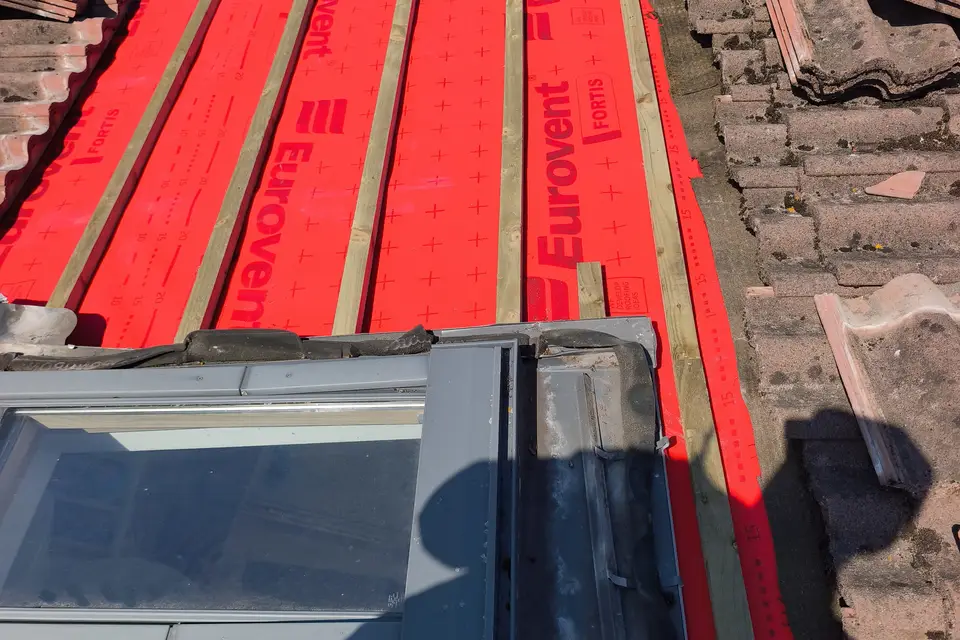
- Three leak points
- The flat roof on top, the cheeks and their flashings, and around the window
- Most common
- Failed flashing where the cheeks meet the main roof
- Typical life
- Around 20 to 30 years for a two-layer torch-on roof
- Access
- Often needs scaffolding, so do all the work in one visit
How a dormer keeps water out
A dormer is a small structure built out of the slope of a main roof, usually to add headroom and a window in an attic conversion. Most dormers in Dublin have a flat roof on top, covered in felt or torch-on, with two side walls called cheeks where the dormer meets the slates or tiles of the main roof. Each of those parts sheds water in its own way, and a leak can start at any of the joints between them. Dormer roofs are covered on our flat roof repairs page, and the cheeks and flashings fall under our roof repairs.
Attic conversions with dormers are common across Dublin, from older semis in Dundrum to estates in Lucan and Dublin 15. Because dormers are high and hard to see from the ground, a problem can run for a long time before it shows inside.
Leaks through the flat roof on top
The flat roof on a dormer has the same faults as any flat roof, with less room for error. The roof is small, so a split, a blister or a failed seam is never far from the edge. Water that ponds in a dip has nowhere else to go, and our guide to water pooling on a flat roof explains why that shortens the life of the felt. The drip edge at the front, where the roof runs into a gutter or over the face of the dormer, is a frequent weak point, as is the back edge where the dormer roof tucks under the slates of the main roof.
Older dormers often have a single layer of felt that has gone brittle. A modern two-layer torch-on felt roof lasts considerably longer, though torching near timber cladding needs care and cold-applied felt is sometimes used at the edges instead.
Many dormer roofs drain to a small gutter at the front or straight onto the main roof below. If that gutter blocks with moss and grit washed off the felt, water backs up over the drip edge and runs down the face of the dormer, where it can get in around the window head. Clearing it is a small job, but it is often missed because the gutter is out of sight from the ground.
Not sure what yours needs? WhatsApp us a photo and we will tell you what it looks like.
WhatsApp a photoOr get a free quoteLeaks at the cheeks and flashings
The cheeks are where most dormer leaks start. Where each side wall meets the main roof, the slates or tiles are cut to fit against it and a flashing, usually stepped lead or lead soakers tucked under each slate, turns the water away from the joint. When the lead splits, lifts or was never dressed properly, rain running down the main roof gets in behind the cheek and appears inside on the side wall of the attic room or at the corner of the ceiling.
Cheeks clad in tiles, slate or timber can also let water in through the cladding itself, especially on the side facing the prevailing wind. A stain that appears after wind-driven rain from one direction often points to the cheek on that side.
Leaks around the window
Water can also get in around the dormer window. The seal around the window frame, the flashing or sill detail below it and the joint between the frame and the cheek all age. A leak here usually shows directly around the window inside, often at the bottom corners. It helps to know which it is, because a failed frame or glazing unit is a job for a window installer, while the flashing and the roof around it are roofing work. A roofer can check the roofing details around the window and tell you whether the frame itself is the likely problem.
How long a dormer roof lasts
A dormer roof lasts about as long as any flat roof of the same type, so older built-up felt typically gives 10 to 20 years and a well-laid two-layer torch-on roof around 20 to 30. Lead flashings on the cheeks can last much longer if they were fitted properly. Our article on how long a roof lasts in Ireland has typical figures for each material.
Repair or re-cover
A single split, a lifted drip edge or one failed section of cheek flashing can be repaired on its own. When the felt is brittle across the whole dormer roof, the deck feels soft, or the roof has been patched more than once, re-covering it is usually better value. Because dormers often need scaffolding, it makes sense to deal with the flat roof and the cheek flashings during the same visit rather than paying for access twice. Our guide to flat roof repair costs covers what drives the price, and a leak where an extension roof joins the house, covered in our extension roof leaks guide, often has the same causes. A re-cover is also a good moment to check the insulation and ventilation in the dormer roof, because condensation inside a poorly ventilated dormer can rot the deck from below.
Getting it traced
Note where the stain appears inside, on the side wall, the ceiling or around the window, and whether it follows wind from one direction or any heavy rain. Photos of the dormer from the garden or the street help us judge access before we visit. We check the flat roof, the cheeks and the flashings, explain which one has failed and give you a free quote for the repair.
Frequently asked questions
What are the common problems with dormer roofs?
Splits, blisters and ponding on the small flat roof on top, failed lead flashing where the cheeks meet the main roof, and worn seals and flashings around the window. Most dormer leaks start at one of those joints.
How long does a dormer roof last?
About as long as any flat roof of the same type: roughly 10 to 20 years for older built-up felt and around 20 to 30 years for a well-laid two-layer torch-on roof. Good lead flashings on the cheeks can last longer.
Does a dormer roof repair need scaffolding?
Often, because dormers sit high on the roof. Small repairs can sometimes be reached from a roof ladder or a tower, but it is worth doing all the dormer work in one visit when scaffolding is needed.
Why does my dormer only leak when the wind is from one side?
Wind-driven rain is getting in on the side facing the weather, usually behind a lifted cheek flashing or through the cladding on that cheek. Note the wind direction when the leak appears, as it points to which side to check.
Can a leaking dormer cheek be repaired without re-roofing the dormer?
Yes, if the flat roof on top is sound. The slates or tiles along the cheek are lifted, the flashing is renewed and the covering is refixed, without touching the rest of the dormer.